
< UNITED STATES | HONOLULU: Moana Surfrider
1901
Moana Surfrider
Honolulu
2365 Kalakaua Avenue
Honolulu, HI 96815
United States
Phone: +1 808 922 31 11
Fax: +1 808 924 47 99
www.moana-surfrider.com
Facebook | Twitter | Instagram
GPS: 21° 16' 35.6" N 157° 49' 35.7" W
MAKE A RESERVATION
powered by: Booking.com







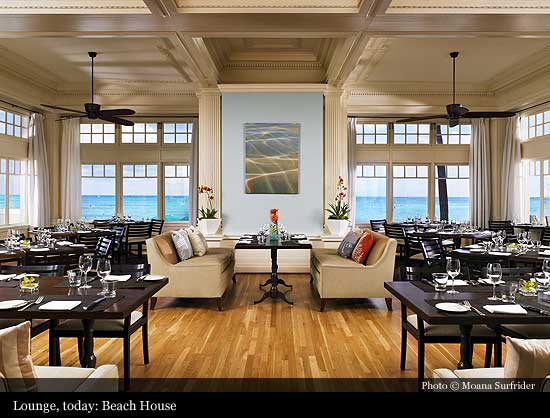

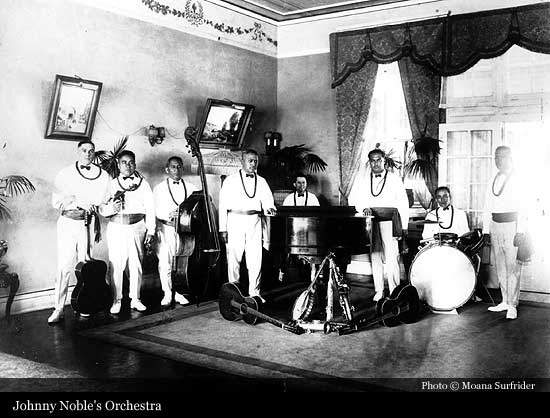

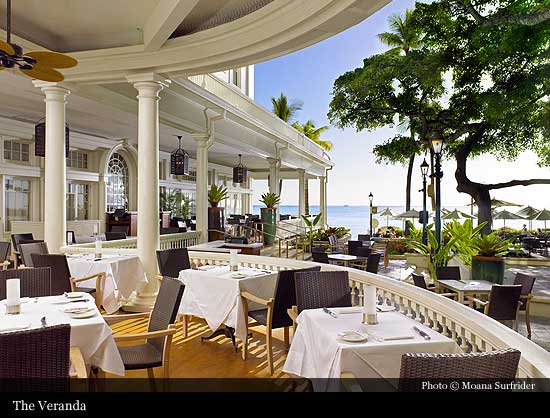

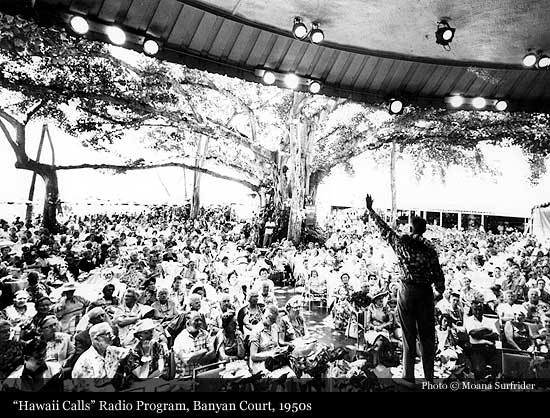


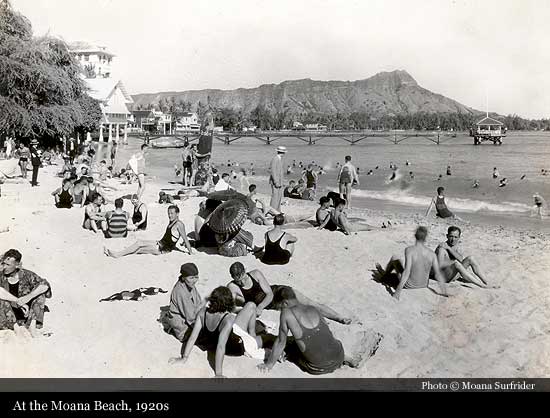



Waikiki was once a quiet backwater area dotted with the summer residences of Hawaiian royalty and wealthy residents. By the late 1890s, with additional steamship
lines to Honolulu, the arrival of visitors to Oahu was increasing. In 1896, Walter Chamberlain Peacock, a wealthy Waikiki home owner at the time, proposed to build Waikiki’s first
resort to provide a solution to the area’s main drawback—the lack of suitable accommodations on the beach. His corporation, The Moana Hotel Company, Ltd., commissioned architect
Oliver G. Traphagen to draw up a plan for the hotel. The Lucas Brothers, who also built the Iolani Palace, were the prime contractors.
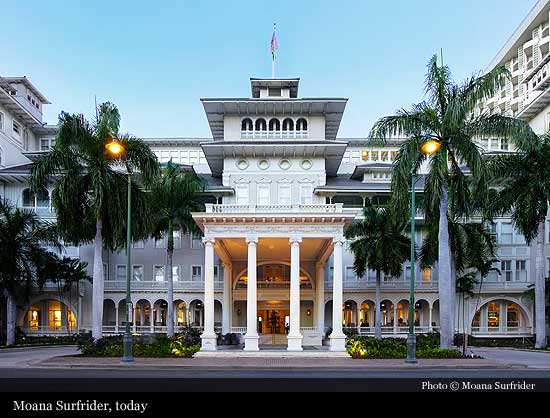
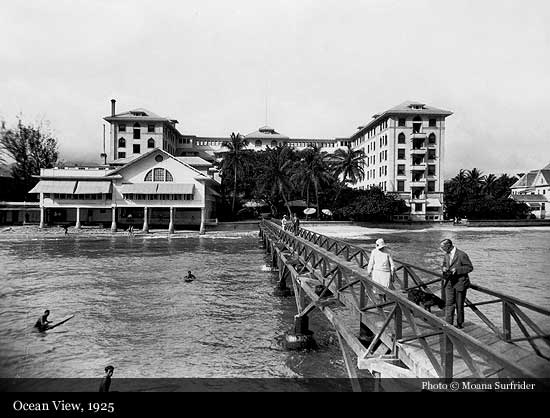
The Moana Hotel officially opened on March 11, 1901, ushering in the birth of tourism for the islands. Designed in the old colonial style architecture of the period, it boasted 75
rooms and was the costliest, most elaborate and modern hotel building in the Hawaiian Islands at the time. Each room on the three upper floors had a bathroom and a telephone – innovations
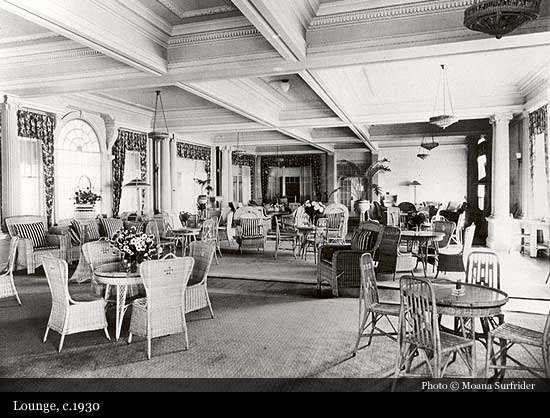
for any hotel of the times. The hotel also had its own ice plant and electric generators. The first floor had a billiard parlor, saloon, main parlor, library, office, and reception
area.
 The Moana, which from Hawaiian is translated to “broad expanse of ocean,” lived up to its name with the crowning achievement of a rooftop observatory 120 feet off the ground, lit by
more than 300 lamps. The hotel’s first guests in 1901 were a group of 114 Shriners hosted by the local Aloha Temple Shriners. They paid a costly $1.50 per night for
their rooms.
The Moana, which from Hawaiian is translated to “broad expanse of ocean,” lived up to its name with the crowning achievement of a rooftop observatory 120 feet off the ground, lit by
more than 300 lamps. The hotel’s first guests in 1901 were a group of 114 Shriners hosted by the local Aloha Temple Shriners. They paid a costly $1.50 per night for
their rooms.
In 1905, Peacock sold the hotel to Alexander Young, a prominent Honolulu businessman with other island hotel interests. After Young’s death in 1910, his estate continued to operate the
hotel until Matson Navigation Company bought it in 1932 for $1.6 million. By 1918, Hawaii had 8,000 visitors annually and by the 1920s, Matson Navigation Company ships were bringing an
increasing number of wealthy visitors. This prompted a massive addition to the hotel.
In 1918, two floors were added along with concrete wings on each side designated in the Italian Renaissance style doubling the size of the hotel. In 1927, Matson Navigation Company opened
The Royal Hawaiian hotel.
With the attack on Pearl Harbor by Japanese forces on the morning of December 7, 1941, all of Hawaii was on war footing and martial law was declared. Barbed wire stretched across the beaches
and blackout restrictions were enforced. Matson’s biggest hotel, The Royal Hawaiian, was leased to the U.S. Navy as a rest and relaxation center, mainly for submarine personnel. The Moana,
however, remained open as a guest hotel, but was frequently filled with servicemen and defense-related personnel. The hotel weathered the war years without too many changes. Some normalcy
returned after martial law was lifted and when the war ended upon Japan’s surrender.
With the advent of regularly scheduled airline services from the west coast and tourism booming in the late 1940s and 1950s, the Moana transformed into the mecca of Honolulu society. The
Surfrider Hotel was built in 1952 and the Surfrider Tower in 1969.
Matson continued to service its hotels with passenger service until it sold all its hotel properties in Waikiki to the Sheraton Hotel chain in 1959. That same year, Hawai‘i became the 50th
state and witnessed the first year of jet service to the islands. In turn, Sheraton, in 1963, sold the Moana and The Royal Hawaiian to Japanese industrialist, Kenji Osano and his Kyo-Ya
Company, Ltd., but continued to manage the properties under a long-term contract until Starwood Hotels & Resorts acquired ITT Sheraton Corporation in 1998.
Under new owners Kyo-ya Company, Limited, a renovation in the 1980’s was overseen by joint architects Virginia D. Murison and Chapman Desai Sakata. The restoration of the “First Lady” included
upgrading and integration of the Ocean Lanai and the Surfrider tower into the overall architecture format, which re-opened in March 1989. The historic restoration was recognized for numerous,
worldwide awards such as the President’s Award for Historic Preservation, accepted by Murison at the Whitehouse on behalf of the Moana Surfrider in 1992.
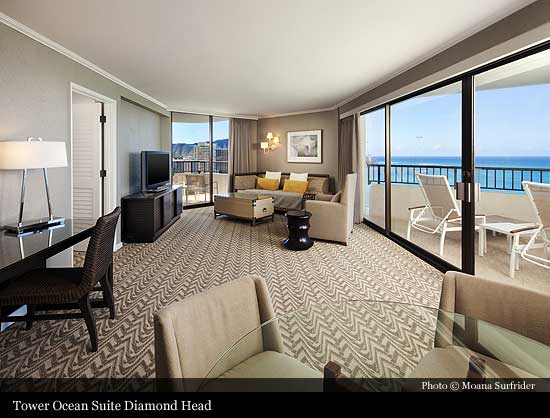
In June 2007, Starwood re-flagged the Moana from a Sheraton property to a Westin resort. While maintaining its elegant ambiance and Hawaiian sense of place, the historic hotel has been renewed
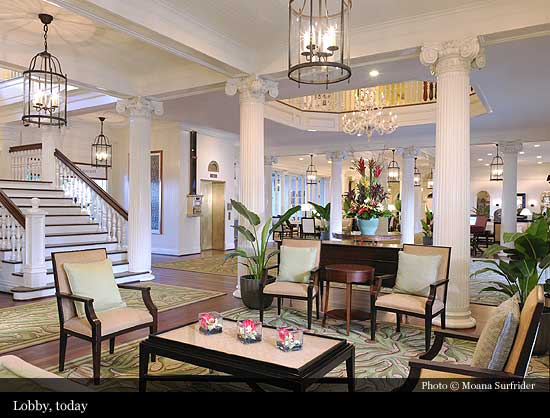
with modern amenities including the Westin’s signature Heavenly Bed and Heavenly Bath, as well as new flat screen televisions. The Moana’s distinctive porte cochere entrance draws visitors to
wander into a revitalized lobby featuring hardwood floors, new furniture and lighting fixtures.
In October 2008, the Moana welcomed the opening of the luxurious 17,000 square foot Moana Lani, becoming the first beachfront spa on Oahu and first Heavenly Spa by Westin on the island. Boasting
views of the sand and surf of Waikiki, this relaxing retreat includes two couple’s treatment suites with beachfront lanais and whirlpool tubs, nine private massage therapy rooms, a body treatment
room, a Vichy shower water therapy room, and three facial rooms. Moana Lani also features a manicure and pedicure area, an exclusive product retail area on both the spa level and hotel lobby
level, and a new 24-hour state-of-the-art WestinWORKOUT® fitness center that is free of charge to hotel guests. As of the opening of Moana Lani in October, the hotel officially operates under
its new name, Moana Surfrider, A Westin Resort & Spa.
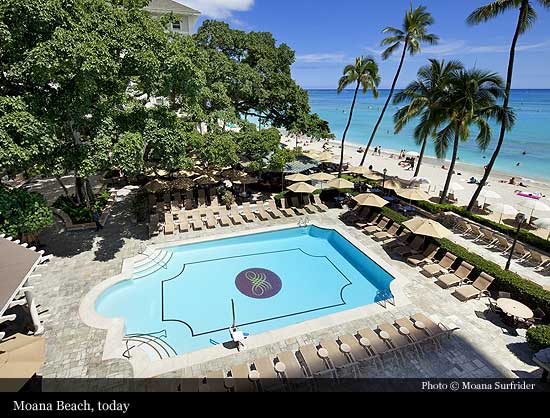
Today, the Moana Surfrider, A Westin Resort & Spa takes its place among America’s leading hotels listed in the National Register of Historic Places. The elegant architectural features of the
hotel have remained intact and an important piece of Hawai‘i’s history has been preserved. Contemporary amenities, enhanced guest facilities and Hawaiian cultural programs have breathed new life
into the “First Lady of Waikiki.”.
Additional literature:
#Stan Cohen: The First Lady of Waikiki, a pictorial history of the Sheraton Moana Surfrider
Pictorial Histories Publishing Co., 2004 | ISBN-10: 1575100088; ISBN-13: 978-1575100081
English language | 86 pages | Paperback
| Buy it at Amazon | Buy it at Alibris |